

Why FIFA World Cup 2026 Is a Technological Milestone
FIFA World Cup 2026 Technology is transforming modern football through artificial intelligence, smart stadiums, robotics, advanced broadcasting, and connected digital systems. The tournament showcases how innovation is improving the experience for players, officials, and fans.
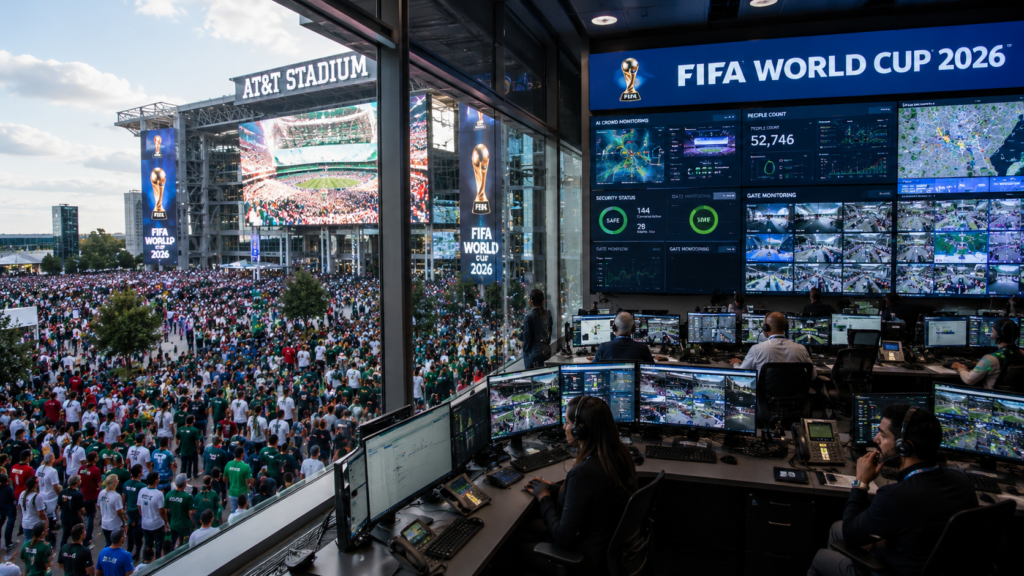
Unlike previous editions, the 2026 tournament will rely on a combination of artificial intelligence (AI), smart stadium infrastructure, advanced data analytics, connected devices, and digital services to support match operations, improve security, and enhance the experience for millions of fans worldwide. These technologies are designed to assist tournament organizers rather than replace the human element that makes football unique.
The Biggest FIFA World Cup Ever
The expansion from 32 to 48 teams means the FIFA World Cup 2026 will feature significantly more matches, players, officials, and supporters than any previous edition. Organizing an event of this scale across three countries presents logistical challenges that traditional management systems alone cannot efficiently handle.
Technology helps bridge this gap by enabling real-time communication between venues, improving transportation planning, supporting stadium operations, and allowing organizers to respond quickly to changing situations. Digital infrastructure also makes it easier to coordinate broadcasting, ticketing, accreditation, and event management across multiple host cities.
Example: Unlike the FIFA World Cup Qatar 2022, which was hosted in a single country, the 2026 tournament requires seamless coordination across three nations, making advanced digital infrastructure an essential part of tournament operations.
Why Technology Matters More Than Ever
Modern football extends far beyond what happens during the ninety minutes on the pitch. Fans expect fast digital services, secure online ticketing, live match statistics, interactive mobile apps, and high-quality broadcasts wherever they are in the world.
At the same time, referees need accurate decision-support systems, broadcasters require real-time performance data, and stadium operators must manage crowd safety, security, and operational efficiency. Technology helps meet these expectations by processing large volumes of information in real time while reducing delays and improving overall reliability.
Instead of changing how football is played, these innovations help create a safer, fairer, and more connected tournament for everyone involved.
Building on Previous FIFA Innovations
The FIFA World Cup 2026 is not introducing football technology from scratch. Instead, it builds on innovations that have already demonstrated their value in previous FIFA tournaments.
For example, Goal-Line Technology helped eliminate uncertainty over whether the ball had crossed the goal line, while the Video Assistant Referee (VAR) system improved the accuracy of important match decisions. During the FIFA World Cup Qatar 2022, FIFA also introduced Semi-Automated Offside Technology (SAOT) and the Connected Match Ball, both of which enhanced officiating by providing referees with faster and more precise information.
The 2026 tournament is expected to continue refining these technologies while integrating them into a larger digital ecosystem that supports tournament operations, broadcasting, fan engagement, and stadium management.
Smart Stadiums and AI: Building the Future of Football
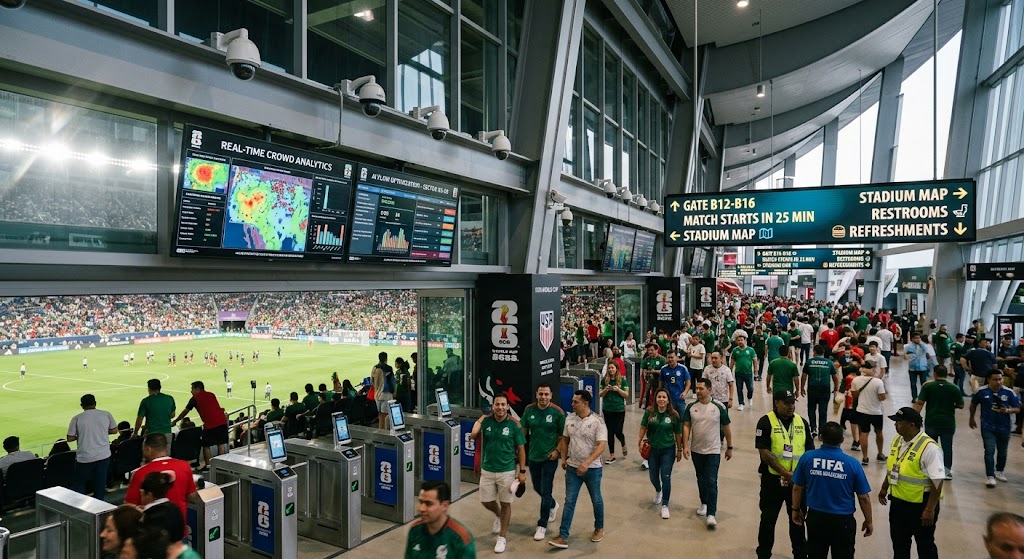
The FIFA World Cup 2026 will introduce football fans to a new era of smart stadiums, where digital technologies and artificial intelligence (AI) work together to improve safety, efficiency, and the overall match-day experience. Unlike traditional stadiums that rely heavily on manual operations, smart stadiums use connected systems, real-time data, and automation to manage everything from crowd movement and security to energy consumption and digital services.
With matches taking place across 16 host cities in the United States, Canada, and Mexico, these intelligent systems will play a vital role in helping organizers coordinate one of the largest sporting events ever held.
What Makes a Stadium Smart?
A smart stadium is more than a modern sports venue. It combines technologies such as the Internet of Things (IoT), cloud computing, AI, and advanced sensors to monitor stadium operations in real time.
These systems collect data from thousands of connected devices, allowing operators to track crowd movement, manage lighting and climate control, monitor security cameras, and respond quickly to operational issues. Instead of waiting for problems to occur, stadium staff can identify potential risks early and make informed decisions based on live data.
Example: Many FIFA World Cup 2026 host venues already use centralized digital control systems that monitor multiple stadium functions from a single operations center.
AI-Powered Crowd Management
Managing tens of thousands of spectators before, during, and after every match requires careful planning. Artificial intelligence helps organizers understand crowd behavior by analyzing data from entry gates, surveillance cameras, and connected sensors.
If one entrance becomes congested, AI-powered systems can alert operators and recommend alternative access points. Digital displays and official mobile applications can then guide fans toward less crowded areas, reducing waiting times and improving overall safety.
This technology also helps emergency response teams monitor crowd density and react more quickly if unexpected situations arise.
Example: Similar crowd management technologies are already used in major international airports and large sports venues to improve visitor flow and reduce congestion during peak periods.
Intelligent Security and Surveillance
Security is one of the highest priorities for an event as large as the FIFA World Cup 2026. Modern smart stadiums increasingly rely on AI-assisted surveillance systems that help security teams monitor large areas more effectively.
These systems can analyze live video feeds, identify unusual activity, detect unattended objects, and notify security personnel when additional attention may be required. Rather than replacing security staff, AI provides faster situational awareness, allowing trained professionals to respond more efficiently.
Advanced access control systems, digital credentials, and secure monitoring platforms further strengthen stadium security while helping fans enter venues more smoothly.
Example: AI-powered surveillance solutions are already used in many international stadiums and public venues to support security personnel and improve operational awareness.
Smart Ticketing and Digital Entry
Digital ticketing has transformed the way fans access sporting events. Instead of carrying printed tickets, supporters can use secure mobile tickets that are verified electronically at stadium entrances.
This approach reduces paper waste, shortens entry times, and helps prevent ticket fraud through encrypted QR codes and secure authentication methods. Digital ticketing also allows organizers to communicate important updates directly to fans before and during match days.
For an event as large as the FIFA World Cup 2026, digital access systems will help streamline stadium operations while improving convenience for spectators.
Example: FIFA has successfully implemented mobile ticketing during recent international tournaments, making entry faster, safer, and more efficient.
Smart Energy Management
Technology is also helping stadiums become more energy-efficient. Intelligent building management systems continuously monitor lighting, air conditioning, ventilation, and electricity usage to ensure resources are used efficiently throughout the event.
Instead of operating at full capacity throughout the day, these systems automatically adjust energy consumption based on occupancy levels and operational requirements. This not only reduces operating costs but also supports more sustainable event management.
Example: Mercedes-Benz Stadium in Atlanta uses advanced building management technology and has earned LEED Platinum certification, demonstrating how modern stadiums can combine innovation with environmental responsibility.
How Smart Stadiums Will Shape the FIFA World Cup 2026
Smart stadium technology is expected to become one of the defining features of the FIFA World Cup 2026. By combining artificial intelligence, connected infrastructure, digital services, and real-time analytics, FIFA and local organizers can improve stadium operations while delivering a safer and more enjoyable experience for millions of supporters.
From faster stadium entry and intelligent crowd management to enhanced security and sustainable energy use, smart stadiums demonstrate how technology is transforming football beyond the action on the pitch. As the tournament unfolds across three host nations, these innovations will help ensure that every venue operates efficiently while meeting the expectations of players, officials, broadcasters, and fans alike.Discover more real-world examples in our guide How AI, Automation & Smart Technology Transformed the FIFA World Cup 2026.
Artificial Intelligence Transforming the FIFA World Cup 2026
Artificial Intelligence (AI) is becoming one of the driving forces behind modern football, and the FIFA World Cup 2026 is expected to showcase its impact on an even larger scale. From assisting referees and analyzing player performance to enhancing broadcasts and improving fan engagement, AI is helping make football more accurate, efficient, and interactive.
Rather than replacing human expertise, AI works as a decision-support tool. It processes vast amounts of data within seconds, allowing referees, coaches, broadcasters, and tournament organizers to make faster and better-informed decisions while preserving the fairness and integrity of the game.

AI-Assisted Refereeing
One of the most important applications of AI in football is supporting match officials during key decisions. Referees often have only a few seconds to judge incidents that can influence the outcome of an entire match. AI-powered systems provide additional data to help officials review these situations more accurately.
By combining computer vision, player-tracking technology, and real-time analytics, AI can quickly identify potential offside positions, ball movements, and player interactions. However, the final decision always remains with the referee, ensuring that human judgment continues to play the most important role.
Example: FIFA introduced Semi-Automated Offside Technology (SAOT) during the FIFA World Cup Qatar 2022 to assist referees with faster and more accurate offside decisions.
Semi-Automated Offside Technology (SAOT)
Semi-Automated Offside Technology is one of FIFA Football Technology’s most significant innovations in recent years. The system uses multiple specialized cameras installed around the stadium to track the positions of every player while artificial intelligence continuously analyzes their movements.
When a possible offside situation occurs, the system automatically generates an alert for the Video Assistant Referee (VAR). This allows officials to review incidents more efficiently without relying entirely on manual analysis.
The technology improves consistency, reduces review times, and provides greater confidence in complex offside decisions while maintaining the referee’s authority over the final call.
Example: During the FIFA World Cup Qatar 2022, SAOT significantly reduced the time required to review difficult offside decisions compared with traditional VAR-only reviews.
Connected Match Ball Technology
Artificial intelligence works even more effectively when combined with FIFA’s Connected Match Ball technology. Inside the official match ball is an Inertial Measurement Unit (IMU) sensor that continuously records movement data and sends it to the video operation room hundreds of times every second.
This information helps officials identify the exact moment the ball is touched, making offside decisions more precise when combined with player-tracking data from SAOT.
Beyond refereeing, connected ball data also provides broadcasters and analysts with valuable insights into ball speed, movement, and match dynamics.
Example: The Adidas Al Rihla match ball used during the FIFA World Cup Qatar 2022 became the first official FIFA World Cup ball equipped with connected sensor technology.
AI-Powered Match Analysis
Artificial intelligence is also changing the way football teams prepare for matches. Modern analytics platforms process thousands of performance metrics, including passing accuracy, pressing intensity, defensive positioning, sprint distance, and expected goals (xG).
Instead of spending hours reviewing match footage manually, coaches and analysts can use AI-generated insights to identify tactical strengths, weaknesses, and improvement opportunities more efficiently.
These data-driven insights help teams make informed decisions before, during, and after every match.
Example: Many professional football clubs use AI-powered performance analysis platforms from companies such as Stats Perform and Opta to evaluate players and develop match strategies.
AI in Broadcasting and Fan Engagement
Artificial intelligence is also enhancing the viewing experience for millions of football fans around the world. Broadcasters use AI to generate live statistics, automated highlights, tactical graphics, and player performance visualizations during matches.
At the same time, official digital platforms can use AI to personalize content by recommending match highlights, news updates, and videos based on a fan’s favorite teams or players.
AI-powered virtual assistants and chatbots can also answer common questions about tickets, schedules, transportation, and stadium services, providing faster support throughout the tournament.
Example: AI-generated match highlights and real-time player statistics have become increasingly common across major international football broadcasts, giving viewers deeper insights into every game.
How AI Is Shaping the Future of Football
Artificial intelligence has moved far beyond being an experimental technology. It now supports referees, coaches, broadcasters, tournament organizers, and football fans in ways that improve both the quality of the game and the overall tournament experience.To explore this topic in greater detail, read our article on Inside FIFA World Cup 2026: The Future of Football Through Automation and AI.
As the FIFA World Cup 2026 approaches, AI is expected to play an even greater role by making officiating more accurate, match analysis more detailed, stadium operations more efficient, and fan engagement more personalized. While technology continues to evolve, its purpose remains the same—to support football while preserving the excitement, fairness, and human spirit that define the world’s most popular sport.
Robotics and Stadium Automation
While artificial intelligence focuses on analyzing data and supporting decision-making, robotics helps automate physical tasks that improve efficiency and safety. Although robots are unlikely to replace the people working behind the FIFA World Cup 2026, they can assist with routine operations, allowing event staff to focus on responsibilities that require human judgment and interaction.
As modern stadiums continue to adopt automation, robotics is becoming an important part of managing large sporting events. From cleaning and equipment transportation to security support and facility inspections, these technologies help create a smoother and more reliable tournament experience.
Robots Supporting Stadium Operations
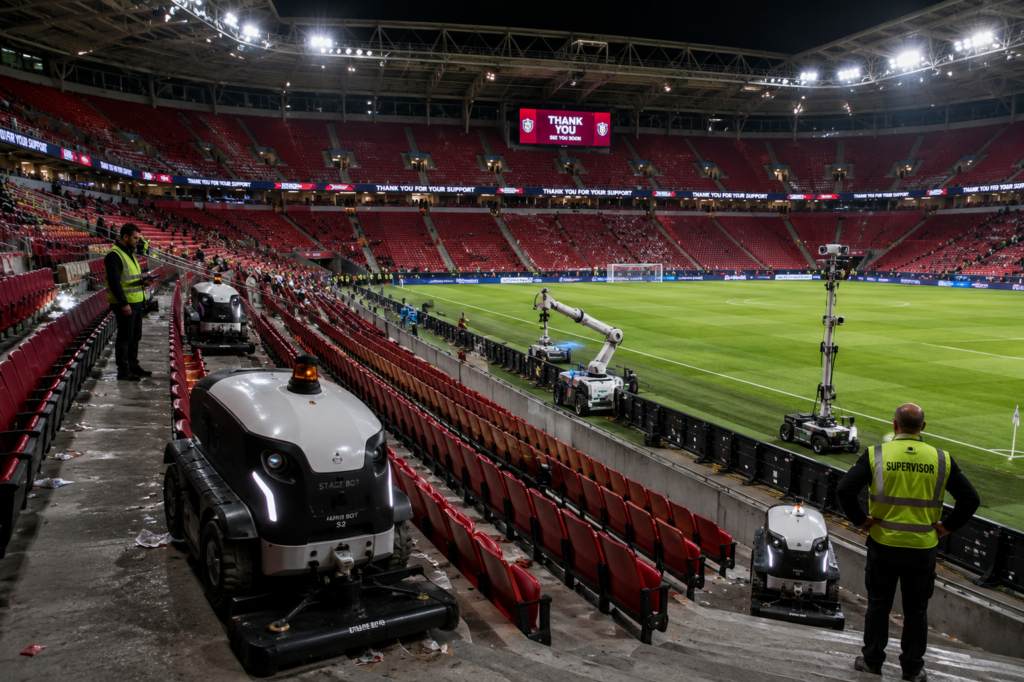
Hosting a tournament with 104 matches across 16 host cities requires thousands of operational tasks to be completed every day. Equipment must be moved between restricted areas, supplies must be delivered on time, and facilities must remain fully operational before, during, and after every match.
Autonomous service robots can assist by transporting equipment, delivering maintenance tools, or carrying medical supplies across large stadium complexes. By automating repetitive tasks, organizers can improve efficiency while reducing the workload on stadium staff.
Example: Autonomous delivery robots are already being used in airports, hospitals, and convention centers to transport equipment and supplies efficiently—demonstrating how similar technologies could support operations at major sporting events.
Robotics in Cleaning and Facility Maintenance
Maintaining clean stadiums is a major challenge when tens of thousands of spectators attend every match. Modern sports venues increasingly use robotic cleaning machines to keep public areas clean while reducing the time and effort required for manual maintenance.
These automated machines can clean large concourses, seating areas, corridors, and public spaces with consistent performance, allowing maintenance teams to focus on more specialized tasks.
In addition to cleaning, robotic inspection systems can help identify maintenance issues before they become serious, improving both operational efficiency and visitor safety.
Example: Several modern stadiums and large entertainment venues already use autonomous floor-cleaning robots to maintain facilities during busy event schedules.
Robotics Enhancing Stadium Security
Security technology continues to evolve alongside robotics. Some modern venues use autonomous security robots equipped with cameras, environmental sensors, and communication systems to patrol designated areas and report unusual activity.
These robotic systems do not replace security personnel. Instead, they provide additional situational awareness by monitoring specific locations continuously and alerting human operators when attention is needed.
When combined with AI-powered surveillance and centralized command centers, robotics can strengthen stadium security while helping staff respond more quickly to potential incidents.
Example: Security robots are already deployed in airports, shopping centers, and business districts worldwide to support security teams by monitoring public spaces and reporting suspicious activity.
Automation in Logistics and Equipment Management
Large international tournaments depend on the timely movement of broadcasting equipment, medical supplies, technical hardware, and operational resources. Automated logistics systems help organizers track inventory, reduce delays, and improve coordination between different departments.
Some facilities also use Automated Guided Vehicles (AGVs) to transport heavy equipment safely through restricted operational areas. These systems reduce manual handling while improving workplace safety and operational efficiency.
As the FIFA World Cup 2026 spans three countries, automated logistics can help support the movement of essential resources across multiple venues.
Example: AGVs are widely used in manufacturing facilities and large distribution centers, demonstrating how automation can simplify complex logistical operations.
The Future of Robotics in Football
Robotics continues to evolve rapidly, and future football tournaments may benefit from even more advanced automation. Emerging technologies could support stadium inspections, infrastructure monitoring, accessibility services, and visitor assistance without replacing the human workforce.
However, the primary goal of robotics remains the same: to assist people rather than replace them. Human decision-making, communication, and problem-solving will continue to play a central role in organizing major sporting events, while robotic systems handle repetitive and physically demanding tasks.
As technology advances, robotics is expected to become an increasingly valuable partner in delivering safer, more efficient, and better-organized football tournaments.
How Robotics Complements Smart Stadiums
Robotics is only one part of the broader smart stadium ecosystem. When integrated with artificial intelligence, IoT sensors, cloud computing, and real-time data analytics, robotic systems help create stadiums that are more responsive, efficient, and secure.
For the FIFA World Cup 2026, this combination of intelligent technologies has the potential to improve daily operations while allowing organizers to focus on what matters most—delivering an unforgettable experience for players, officials, broadcasters, and millions of football fans around the world.
Next-Generation Football Technology and Data Analytics
Modern football is no longer driven solely by skill and tactics on the pitch. Data has become one of the sport’s most valuable assets, helping teams, referees, broadcasters, and tournament organizers make informed decisions. At the FIFA World Cup 2026, next-generation technologies are expected to play a significant role in improving performance analysis, stadium operations, and match management through real-time data collection and advanced analytics.
By combining wearable technology, cloud computing, IoT sensors, and high-speed connectivity, FIFA aims to create a more connected and data-driven tournament while maintaining the excitement and integrity of the game.
Wearable Technology and Player Performance Tracking
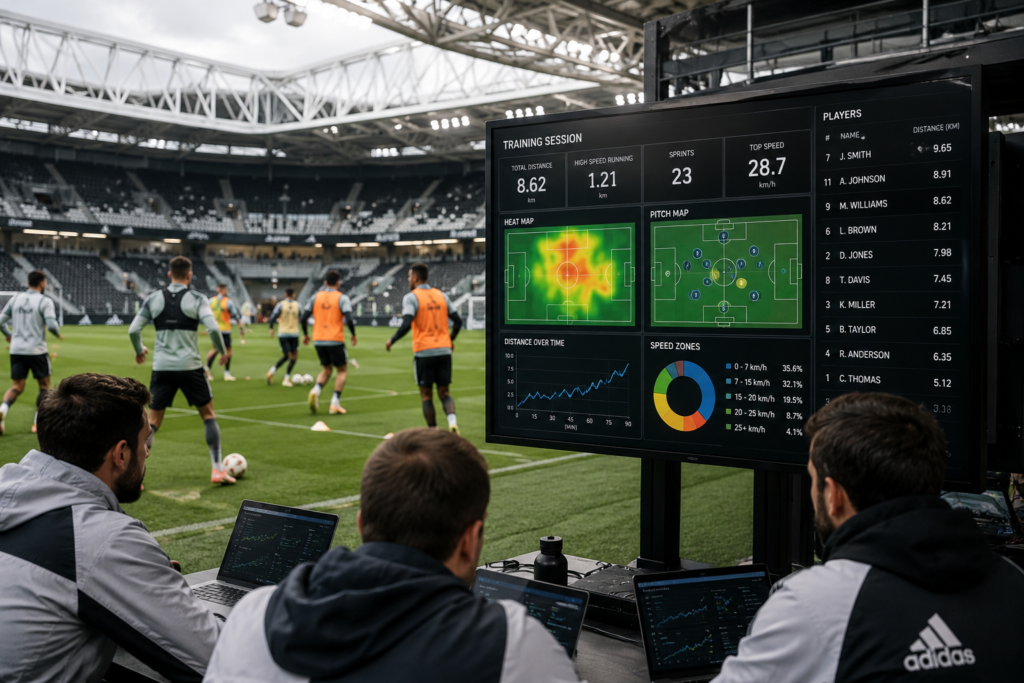
Football teams increasingly use wearable technology during training sessions to monitor player fitness and performance. Devices equipped with GPS trackers, heart-rate monitors, and motion sensors collect valuable information about running distance, sprint speed, acceleration, workload, and recovery.
This data allows coaches and sports scientists to understand each player’s physical condition, helping them design personalized training programs and reduce the risk of injuries.
Although wearable tracking devices are generally used during training rather than official matches, the information collected plays an important role in preparing players for high-level competitions like the FIFA World Cup.
Example: Many national teams use GPS performance vests during training camps to monitor player workload and optimize recovery before important matches.
Advanced Player Data Analytics
Every football match generates millions of data points. Modern analytics platforms transform this information into meaningful insights that help coaches evaluate tactics, player performance, and overall team strategy.
Instead of relying only on traditional statistics such as possession or shots on target, advanced analytics also measure metrics like Expected Goals (xG), passing networks, pressing intensity, defensive positioning, ball progression, and player movement.
These detailed insights help coaching staff identify strengths, correct weaknesses, and prepare more effectively for upcoming opponents.
Example: Professional football clubs and national teams use analytics platforms from companies such as Opta and Stats Perform to support tactical planning and performance evaluation.
Cloud Computing for Tournament Operations
Managing a tournament across three countries and sixteen host cities requires continuous communication between organizers, broadcasters, stadium operators, and technical teams.
Cloud computing makes this possible by allowing information to be stored securely and accessed in real time from multiple locations. Instead of relying on isolated local servers, connected cloud platforms help synchronize ticketing systems, accreditation, scheduling, broadcasting, and operational planning throughout the tournament.
This ensures that everyone involved has access to the latest information whenever and wherever it is needed.
Example: Large international sporting events increasingly rely on cloud-based infrastructure to coordinate operations across multiple venues while improving efficiency and reliability.
IoT Sensors and Smart Stadium Infrastructure
The Internet of Things (IoT) refers to a network of connected devices that continuously collect and share information. Inside modern stadiums, IoT sensors monitor everything from lighting and air conditioning to crowd density, equipment performance, and energy consumption.
This real-time monitoring allows stadium operators to identify potential issues before they affect spectators or match operations. Predictive maintenance also helps reduce unexpected equipment failures by detecting problems early.
As a result, stadiums become safer, more efficient, and easier to manage during high-profile international events.
Example: Many recently built stadiums use IoT-based building management systems to automatically control lighting, temperature, ventilation, and energy usage.
High-Speed 5G Connectivity and Real-Time Data
Fast and reliable internet connectivity has become essential for modern football tournaments. High-capacity 5G networks and advanced Wi-Fi infrastructure allow thousands of spectators, broadcasters, security teams, and operational staff to stay connected simultaneously.
Real-time connectivity supports digital ticket verification, live broadcasting, mobile applications, AI-powered analytics, cashless payments, and communication between tournament officials across different venues.
For supporters inside the stadium, high-speed connectivity also makes it easier to access match statistics, share content on social media, and receive instant updates through official FIFA digital platforms.
Example: Several FIFA World Cup 2026 host stadiums already feature high-density Wi-Fi and advanced 5G infrastructure capable of supporting major international sporting events.
How Data Is Transforming Modern Football
Technology has changed football from a game that relied primarily on observation to one supported by accurate, real-time information. Data now helps coaches make tactical decisions, referees review important incidents, broadcasters explain the action more clearly, and organizers manage complex tournament operations.
At the FIFA World Cup 2026, next-generation technologies are expected to strengthen every aspect of the competition. By combining wearable performance tracking, advanced analytics, cloud computing, IoT sensors, and high-speed connectivity, FIFA continues to demonstrate how data can improve football while preserving the excitement, fairness, and unpredictability that make the sport so popular worldwide.
How Technology Improves the Fan Experience
The FIFA World Cup is about more than the action on the pitch—it is also about creating unforgettable experiences for millions of supporters around the world. Whether fans are watching from the stadium or following matches from home, technology has transformed the way they connect with the tournament.
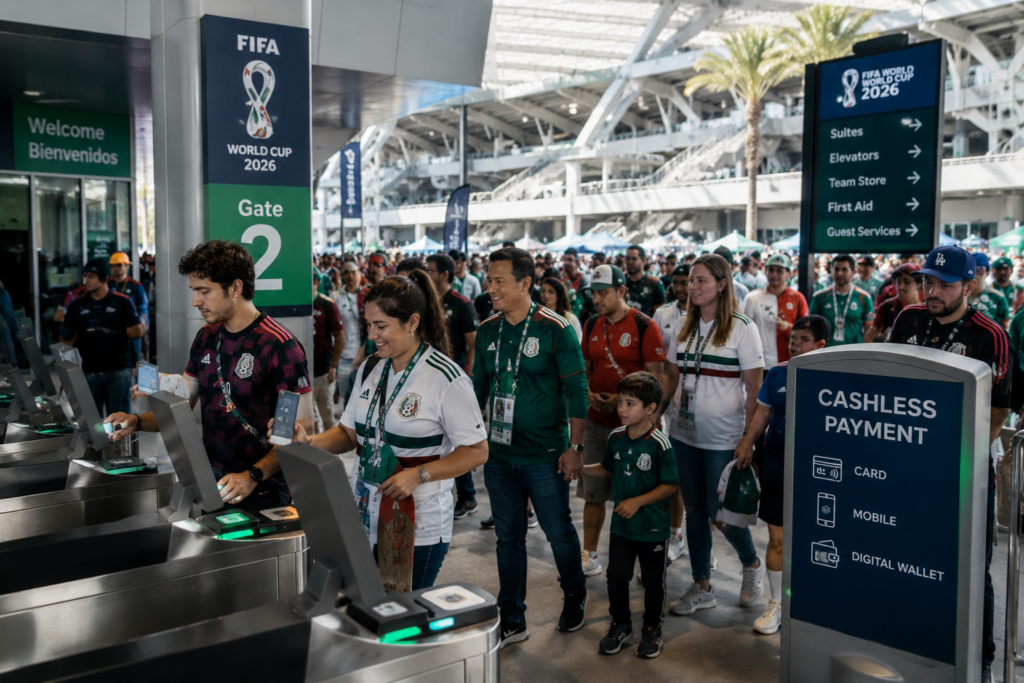
For the FIFA World Cup 2026, digital innovations are expected to make every stage of the fan journey more convenient, interactive, and personalized. From mobile ticketing and cashless payments to augmented reality experiences and real-time match statistics, technology helps fans stay connected before, during, and after every match.
Official FIFA Mobile Apps and Digital Services
Mobile applications have become an essential part of major sporting events. The FIFA Official App provides supporters with instant access to match schedules, live scores, team news, player statistics, venue information, and tournament updates.
Fans can also receive notifications about upcoming matches, ticket information, transportation guidance, and important announcements directly on their smartphones. This reduces the need to search across multiple sources while ensuring supporters have access to reliable information throughout the tournament.
Example: During previous FIFA tournaments, the official FIFA mobile app allowed fans to follow live match updates, access tournament news, and receive personalized notifications based on their favorite teams.
Digital Ticketing and Contactless Stadium Entry
Buying and managing match tickets has become faster and more secure through digital ticketing systems. Instead of carrying printed tickets, supporters can store encrypted mobile tickets on their smartphones and present QR codes for quick verification at stadium entrances.
Digital ticketing helps reduce paper waste, minimizes ticket fraud, and speeds up entry by allowing security personnel to verify tickets electronically. It also enables FIFA to send important updates directly to ticket holders, including gate information, entry times, and venue guidance.
Example: FIFA successfully introduced mobile ticketing at recent international tournaments, making stadium entry more efficient while improving security.
Cashless Payments and Smart Stadium Services
Modern stadiums increasingly offer cashless payment systems that allow fans to purchase food, beverages, and official merchandise using contactless bank cards or digital wallets.
Cashless transactions reduce waiting times at concession stands, improve transaction security, and simplify payment processing for both visitors and vendors. Many stadiums also integrate these services with official mobile applications, helping supporters locate food outlets, retail stores, restrooms, and other facilities more easily.
Example: Several FIFA World Cup 2026 host venues already support contactless payment systems that improve convenience during high-attendance events.
Augmented Reality (AR) and Virtual Reality (VR)
Augmented Reality (AR) and Virtual Reality (VR) are creating new ways for supporters to experience football beyond the traditional live broadcast. AR can display interactive player statistics, match information, or navigation guides through a smartphone, while VR offers immersive experiences that allow fans to explore stadiums or relive memorable moments from unique perspectives.
Although these technologies are still evolving, they continue to play a growing role in sports entertainment by making digital content more engaging and interactive.
Example: Many sports organizations now use AR filters, virtual stadium tours, and immersive digital experiences to strengthen fan engagement before and during major events.
Real-Time Match Statistics and Personalized Content
Today’s football fans expect instant access to detailed match information. Artificial intelligence and advanced analytics allow broadcasters and official digital platforms to provide live statistics such as possession, passing accuracy, player heat maps, sprint speeds, and expected goals (xG).
Personalized recommendations also help supporters discover highlights, interviews, and news related to their favorite teams and players. Instead of searching through large amounts of content, fans receive updates that match their individual interests.
This personalized approach creates a more engaging experience while helping supporters stay connected throughout the tournament.
Example: Live player statistics, tactical graphics, and AI-generated match insights have become standard features of modern football broadcasts and official digital platforms.
Bringing Fans Closer to the Game
Technology is transforming the way supporters experience the FIFA World Cup by making information easier to access, stadium visits more convenient, and digital interactions more engaging. Whether attending matches in person or watching from another part of the world, fans can enjoy faster services, richer content, and more personalized experiences than ever before.
As the FIFA World Cup 2026 brings together millions of supporters across three host nations, these digital innovations will help create a tournament that is not only bigger in scale but also more connected, interactive, and memorable for football fans worldwide.
Cybersecurity and Sustainability in Modern Football
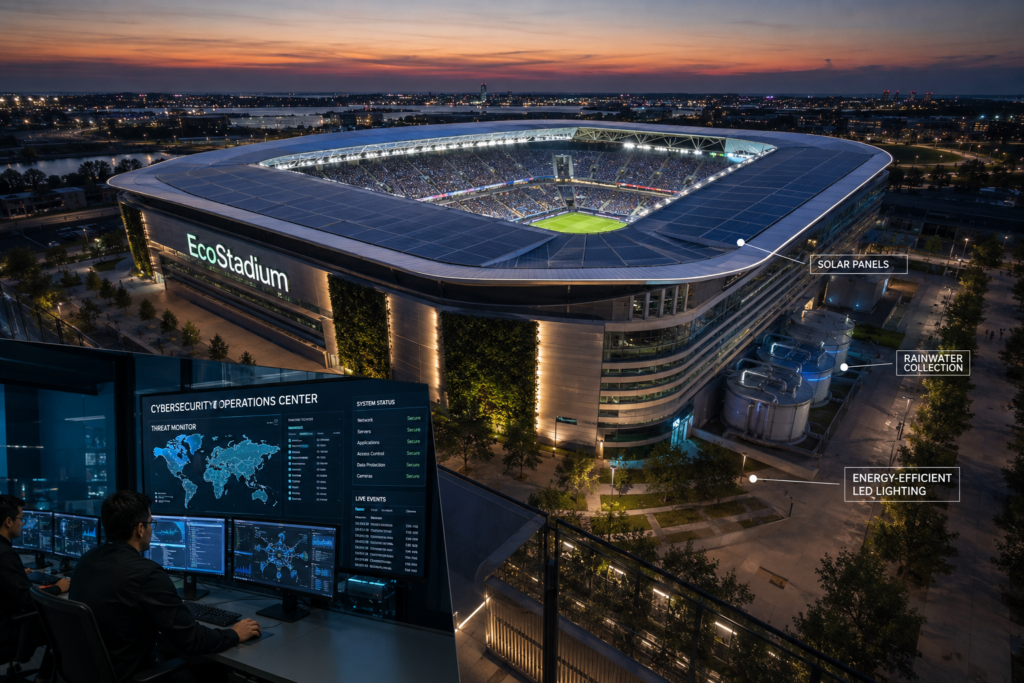
As football becomes increasingly digital, protecting information and operating responsibly have become just as important as delivering exciting matches. The FIFA World Cup 2026 will depend on connected technologies for ticketing, broadcasting, communications, and stadium management, making cybersecurity and sustainability essential parts of tournament planning.
Strong digital security helps protect fans, teams, and tournament operations from cyber threats, while sustainable stadium practices reduce environmental impact through smarter use of energy, water, and other resources. Together, these efforts support a tournament that is both secure and environmentally responsible.
Protecting Fan Data and Digital Services
Millions of supporters will use official digital platforms to buy tickets, access match information, receive tournament updates, and manage their accounts. These services process sensitive information, making data protection a top priority.
Modern cybersecurity systems help safeguard personal information through encryption, secure authentication, continuous monitoring, and regular security testing. These measures reduce the risk of unauthorized access while helping maintain the reliability of digital services throughout the tournament.
Fans also play an important role by using official FIFA platforms, creating strong passwords, and enabling multi-factor authentication whenever available.
Example: Major international sporting events use encrypted digital platforms and secure authentication systems to protect ticketing, payments, and user accounts from cyber threats.
Securing Smart Stadium Infrastructure
Smart stadiums rely on thousands of connected devices, including surveillance cameras, digital entry systems, environmental sensors, and communication networks. Protecting these systems is essential because they support many of the stadium’s daily operations.
Security teams use network monitoring, access controls, and threat detection tools to identify unusual activity before it affects critical services. Regular software updates and system testing also help reduce vulnerabilities and improve operational resilience.
By securing connected infrastructure, organizers can provide a safer and more reliable experience for players, officials, broadcasters, and spectators.
Example: Modern stadium operators regularly monitor connected infrastructure to detect technical issues and strengthen protection against potential cyber risks.
AI Supporting Cybersecurity
Artificial intelligence is becoming an important tool in cybersecurity because it can analyze large amounts of network activity much faster than traditional manual monitoring.
AI-powered security systems can identify unusual patterns, detect suspicious behavior, and alert cybersecurity teams to potential threats in real time. This allows experts to investigate incidents more quickly and respond before small issues become larger security problems.
Although AI improves the speed of threat detection, experienced cybersecurity professionals remain responsible for evaluating alerts and making final decisions.
Example: Many large organizations now use AI-assisted security platforms to monitor networks continuously and improve their ability to detect emerging cyber threats.
Sustainable Stadium Design
Environmental sustainability has become a major consideration in the construction and operation of modern sports venues. FIFA also promotes environmentally responsible tournament planning through its FIFA Sustainability initiatives.
These features may include energy-efficient lighting, smart climate control systems, environmentally responsible building materials, and advanced waste management practices. Such improvements help reduce the environmental footprint of large sporting events without affecting the fan experience.
Example: Mercedes-Benz Stadium in Atlanta has achieved LEED Platinum certification, recognizing its commitment to sustainable design and efficient building operations.
Water Conservation and Energy Efficiency
Large stadiums consume significant amounts of electricity and water during major events. Smart building management systems help reduce unnecessary resource usage by automatically adjusting lighting, air conditioning, ventilation, and irrigation according to real-time demand.
Many venues also incorporate water-saving fixtures, rainwater collection systems, and energy-efficient technologies that support long-term sustainability goals while reducing operating costs.
These innovations demonstrate how technology can improve both operational performance and environmental responsibility.
Example: Several modern stadiums use intelligent energy management systems to optimize electricity consumption and reduce water usage throughout the year.
Building a Smarter and More Sustainable World Cup
The FIFA World Cup 2026 is expected to demonstrate that innovation is not only about improving football—it is also about protecting people, digital infrastructure, and the environment. Strong cybersecurity helps safeguard tournament operations and fan information, while sustainable stadium technologies reduce resource consumption and support responsible event management.
By combining secure digital systems with environmentally conscious infrastructure, FIFA and host cities continue to show how major sporting events can embrace modern technology while promoting long-term sustainability. These efforts contribute to a tournament that is safer, more efficient, and better prepared for the future of global football.
The Future of Football Technology Beyond FIFA World Cup 2026
The FIFA World Cup 2026 represents an important milestone in the evolution of football technology, but it is unlikely to be the final destination. As artificial intelligence, robotics, connected infrastructure, and data analytics continue to advance, future tournaments will have access to even more sophisticated tools that can improve match operations, player performance, stadium management, and fan engagement.
While the core principles of football will remain unchanged, technology is expected to continue supporting the sport by making competitions more efficient, secure, and accessible for everyone involved.

Artificial Intelligence Beyond Match Officiating
Artificial intelligence has already proven its value in supporting referees and analyzing football data, but its role is expected to expand in the coming years.
Future AI systems could provide more advanced tactical analysis, improve injury prevention through predictive performance monitoring, and assist tournament organizers with scheduling, logistics, and operational planning. As machine learning models become more accurate, football organizations may gain deeper insights into player development and match preparation.
Despite these advances, AI is expected to remain a decision-support tool rather than replacing coaches, referees, or other football professionals.
Example: Many professional clubs already use AI-based performance platforms to evaluate player fitness, analyze opponents, and support long-term player development.
Smarter Stadiums for Future Tournaments
The next generation of smart stadiums is expected to become even more connected through artificial intelligence, IoT devices, and automated building management systems.
Future venues may optimize energy consumption automatically, improve crowd movement using real-time analytics, and deliver more personalized digital services to supporters. Stadium operators could also use predictive maintenance systems that identify equipment issues before they affect operations.
These innovations would help reduce operational costs while improving safety, sustainability, and the overall match-day experience.
Example: Many newly developed sports venues already integrate intelligent building management systems that monitor lighting, climate control, security, and energy usage from centralized control centers.
Robotics Will Continue Supporting Stadium Operations
Robotics is likely to become more capable as automation technologies continue to improve. Future robotic systems may assist with stadium inspections, equipment transportation, cleaning, maintenance, and visitor support.
Rather than replacing the human workforce, these systems are expected to handle repetitive and physically demanding tasks, allowing stadium staff to focus on responsibilities that require communication, decision-making, and customer service.
As robotic technologies mature, they may become a standard component of large international sporting events.
Example: Autonomous service robots are already being tested in airports, hospitals, and commercial facilities, demonstrating how automation can improve efficiency in large public environments.
FIFA’s Ongoing Commitment to Innovation
Football technology continues to evolve through ongoing research, testing, and collaboration under FIFA Innovation programs and technology partners. Before new innovations are introduced in official competitions, they typically undergo extensive evaluation to ensure they improve the game while maintaining fairness and consistency.
This careful approach allows football to benefit from technological progress without changing the fundamental rules or spirit of the sport.
As innovation continues, future FIFA tournaments are expected to build upon technologies such as Semi-Automated Offside Technology, connected match balls, smart stadium systems, and advanced performance analytics.
Example: FIFA regularly evaluates emerging football technologies through dedicated innovation and testing programs before considering their use in international competitions.
What the Future Holds for Football Technology
The future of football will likely be shaped by a combination of innovation and tradition. Artificial intelligence, robotics, cloud computing, advanced analytics, and smart infrastructure will continue improving how tournaments are organized and experienced, while players, referees, and fans remain at the heart of the game.
The FIFA World Cup 2026 is expected to demonstrate how technology can enhance football without replacing its human element. As digital innovations continue to evolve, the world’s most popular sport will become increasingly connected, efficient, and accessible while preserving the passion, competition, and unpredictability that make football unique.
Frequently Asked Questions (FAQs)
1. What new technology will be used in the FIFA World Cup 2026?
The FIFA World Cup 2026 is expected to showcase advanced technologies such as artificial intelligence (AI), smart stadium systems, Semi-Automated Offside Technology (SAOT), connected match ball technology, real-time data analytics, IoT-enabled infrastructure, and enhanced digital services. These innovations aim to improve officiating, stadium operations, broadcasting, and the overall fan experience.
2. Will AI be used in the FIFA World Cup 2026?
Yes. Artificial intelligence is expected to support several aspects of the tournament, including referee decision-making, player performance analysis, crowd management, broadcasting, and fan engagement. However, AI serves as a decision-support tool, while final decisions remain the responsibility of match officials and tournament organizers.
3. What are smart stadiums in football?
Smart stadiums are modern sports venues that use technologies such as AI, IoT sensors, cloud computing, and automated building management systems to improve security, energy efficiency, crowd management, and fan services. These connected technologies help stadiums operate more safely and efficiently during major sporting events.
4. What is Semi-Automated Offside Technology (SAOT)?
Semi-Automated Offside Technology (SAOT) is a FIFA system that combines AI, specialized tracking cameras, and player-position data to help referees make faster and more accurate offside decisions. The system automatically alerts the Video Assistant Referee (VAR), while the on-field referee continues to make the final decision.
5. How does the Connected Match Ball work?
The Connected Match Ball contains an internal sensor that continuously records movement data during play. When combined with player-tracking technology, this information helps officials identify the exact moment the ball is touched, improving the accuracy of offside decisions and providing additional match data for broadcasters and analysts.
6. How will technology improve the fan experience at the FIFA World Cup 2026?
Technology will enhance the fan experience through mobile ticketing, cashless payments, official FIFA digital platforms, real-time match statistics, AI-powered content recommendations, and smart stadium services. These innovations make attending matches and following the tournament more convenient, interactive, and engaging.
7. Are robots expected to be used during the FIFA World Cup 2026?
Robotics may assist with operational tasks such as cleaning, equipment transportation, maintenance, and facility management in modern stadiums. While robotic systems can improve efficiency, they are designed to support human staff rather than replace them.
8. Why is cybersecurity important for the FIFA World Cup 2026?
The tournament depends on digital platforms for ticketing, communications, broadcasting, and stadium operations. Strong cybersecurity helps protect fan data, secure connected infrastructure, reduce cyber risks, and ensure reliable digital services throughout the competition.
9. How do smart stadiums support sustainability?
Smart stadiums improve sustainability by using intelligent energy management systems, LED lighting, efficient climate control, water-saving technologies, and automated building management. These systems help reduce resource consumption while maintaining a safe and comfortable environment for spectators.
10. What is the future of football technology after FIFA World Cup 2026?
Future football technology is expected to focus on more advanced AI, smarter stadium infrastructure, improved data analytics, enhanced robotics, and innovative digital experiences for fans. FIFA is likely to continue evaluating emerging technologies to improve the game while preserving its fairness, integrity, and competitive spirit.
Introduction
The FIFA World Cup 2026 is set to become the largest and most technologically advanced tournament in football history. With 48 teams, 104 matches, and 16 host cities across the United States, Canada, and Mexico, organizing an event of this scale requires far more than world-class stadiums and talented players. It also demands innovative technology that can support match operations, improve security, enhance broadcasting, and deliver a better experience for millions of fans worldwide.
From artificial intelligence (AI) and smart stadiums to robotics, real-time data analytics, and connected football technologies, innovation is transforming almost every aspect of the modern game. These advancements help referees make more accurate decisions, assist coaches with performance analysis, improve stadium management, and create more interactive digital experiences for supporters.
In this article, you’ll discover how the FIFA World Cup 2026 is embracing next-generation technology, the role of AI and automation in football, how smart stadiums are shaping the future of major sporting events, and why these innovations could influence football long after the final whistle.
Conclusion
The FIFA World Cup 2026 is set to demonstrate how technology can enhance football without changing the essence of the game. From artificial intelligence (AI) and smart stadiums to robotics, advanced data analytics, and connected football technologies, innovation is helping make the tournament safer, more efficient, and more engaging for players, officials, broadcasters, and fans alike.
While these technologies continue to evolve, their primary purpose remains the same: to support better decision-making, improve operational efficiency, and deliver a world-class football experience. Human expertise, fair competition, and the passion of the game will always remain at the heart of football, with technology serving as a powerful tool rather than a replacement.
As the world’s biggest sporting event expands across three countries, the FIFA World Cup 2026 could set new standards for how future tournaments are organized and experienced. The lessons learned from this competition may influence football for years to come, shaping everything from stadium design and fan engagement to match officiating and tournament management.
Whether you’re a football supporter, a technology enthusiast, or simply curious about the future of sports, one thing is clear: innovation is becoming an essential part of football’s next chapter, and the FIFA World Cup 2026 is leading that transformation. For a broader perspective on football innovation, check out our in-depth guide FIFA World Cup 2026 Technology: How AI, Automation & Smart Innovations Changed Football Forever.
Sources
FIFA World Cup 2026
FIFA Football Technology
FIFA Innovation
FIFA Sustainability & Human Rights Strategy
FIFA Tickets
IFAB (Laws of the Game)
Mercedes-Benz Stadium
U.S. Green Building Council (LEED)
Adidas (Official)
1 thought on “FIFA World Cup 2026 Technology: Smart Stadiums, AI, Robotics & Next-Generation Innovations”