What Is Edge AI?
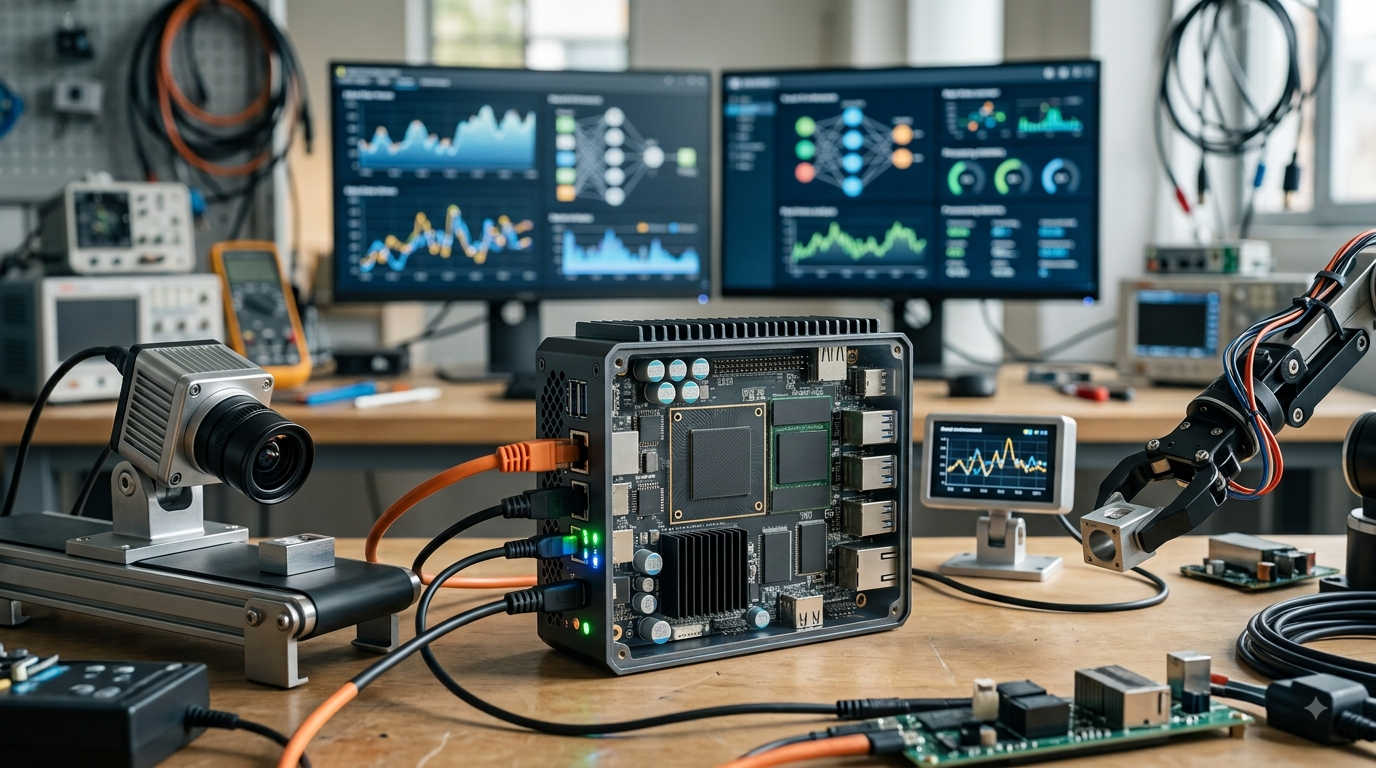
Edge AI is the use of artificial intelligence directly on devices that collect and use data, rather than sending every piece of information to a remote cloud server for processing. These devices can include smartphones, security cameras, industrial machines, vehicles, smart sensors, and robots. Instead of continuously uploading raw data, an edge device can run an AI model locally and produce a result near the source of the data. This approach can make Edge AI explained in simple terms: intelligence is placed closer to where information is created and where decisions need to happen.
How On-Device AI Processing Works
An Edge AI system typically follows a simple process data collection local AI inference decision action. A camera for example can capture an imag while an embedded processor analyzes it locally to detect an object or unusual event. The device can then trigger an action or send only the relevant result to a cloud platform. This reduces the need to continuously transfer large amounts of raw data and can make applications more responsive.
Edge AI vs Traditional Cloud Processing
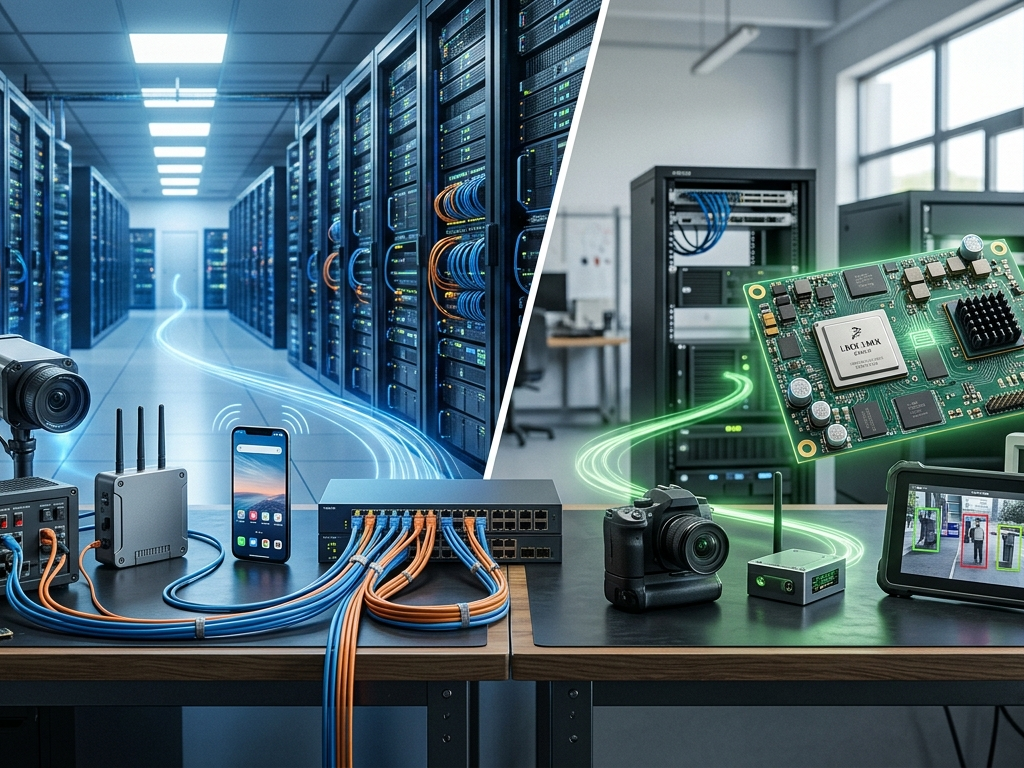
Traditional cloud-based AI usually sends data from a device to remote servers, where powerful processors perform the computation before returning a result. Edge AI moves at least some of that processing closer to the device. The cloud can still handle tasks such as model training, large-scale storage, and complex analytics, while the edge handles time-sensitive inference. This distributed approach allows organizations to choose where each AI workload should run based on factors such as latency, privacy, connectivity, and available computing resources.
Cloud AI vs Edge AI
Cloud AI and Edge AI use many of the same underlying machine learning techniques, but they place the computing workload in different locations. Cloud AI sends data to centralized data centers where powerful servers process it and return the result. This model is useful when an application needs large amounts of computing power centralized data storage, or complex AI models. Edge AI, in contrast performs some or all AI inference closer to the device generating the data This can reduce the time and network traffic required to receive a response.
How Cloud AI Works
In a typical cloud AI system a device collects data and sends it through a network to a remote server. The cloud processes the information and sends the result back to the device or application. This architecture gives organizations access to powerful processors and centralized AI models without requiring every device to have hig end hardware. However network connectivity, data-transfer requirements and response time can become important considerations for applications that need immediate decisions
How Edge AI Works
Edge AI moves AI inference closer to where data is generated. A smartphone camera vehicle robot or industrial controller can use an embedded processor or AI accelerator to analyze information locally. Only selected results or summarized data may need to reach the cloud. This can improve responsiveness and reduce bandwidth use while also allowing some applications to continue functioning when connectivity is limited
| Feature | Cloud AI | Edge AI |
| Processing location | Remote data center | Local device or nearby edge system |
| Response time | Depends partly on network | Often lower latency |
| Internet connection | Usually important | Can support local operation |
| Data transfer | More raw data may be transferred | Can reduce data transfer |
| Computing resources | Very high | Limited by device hardware |
| Privacy | Data may leave the device | More data can remain local |
| Best suited for | Large-scale processing and training | Real time local inference |
Neither approach is universally better. Many modern systems use a hybrid cloud-edge rchitecture, where edge devices handle fast local decisions while the cloud manages model training, storage, fleet management, or more demanding analytics.
Why Is Intelligence Moving From the Cloud to Edge Devices?
The shift toward Edge AI is not happening because cloud computing is becoming unnecessary Instead businesses and engineers are distributing AI workloads between the cloud and edge based on what each application need When a decision must happen immediately, sending data to a remote server can introduce network delays and additional data-transfer requirements Processing information closer to where it is generated can make these systems more responsive and efficient This is especially important for robotics, industrial automation smart cameras vehicles and other systems that continuously interact with the physical world.
Lower Latency for Real-Time AI
Low latency AI is one of the strongest reasons to process information locally A robot navigating around people, an industrial machine detecting a fault, or a vehicle responding to an obstacle may need to analyze sensor data and react quickly. If every decision depends on a round trip to a remote server network conditions can affect response time. On-device processing allows an AI model to analyze data locally and can therefore reduce communication delays. The actual latency improvement depends on the hardware network, model and application,but local inference can be valuable when timing is critical.
Better Data Privacy
Edge AI can also support stronger data privacy by allowing sensitive information to remain on or near the device that generated it. A smart camera for example, may analyze video locally and send only an event or numerical result instead of continuously transmitting raw footage. This does not automatically make an application private or secure devices still need proper encryption, access controls software updates, and security practices. However, reducing unnecessary data transfers can reduce the amount of sensitive information moving across networks.
Lower Bandwidth and Data Costs
Modern devices can generate enormous amounts of information. Cameras, industrial sensors, vehicles, and IoT equipment may continuously produce images, video, audio, and sensor readings. Sending all of that raw data to the cloud can consume significant network bandwidth. Edge AI can filter or analyze information locally and send only important results to a central system. This bandwidth reduction can be particularly useful when thousands of devices operate simultaneously or when network connectivity is expensive.
Offline and Unreliable Network Operation
Another advantage is the ability to continue certain AI functions when internet connectivity is unavailable or unreliable. An edge device with a locally deployed model can perform inference without constantly contacting a cloud server. For example an industrial sensor could continue detecting abnormal conditions even during a temporary network outage. However offline capability depends on the specific system cloud services may still be required for model updates centralized monitoring, storage, or more complex processing.
What Hardware Makes Edge AI Possible?
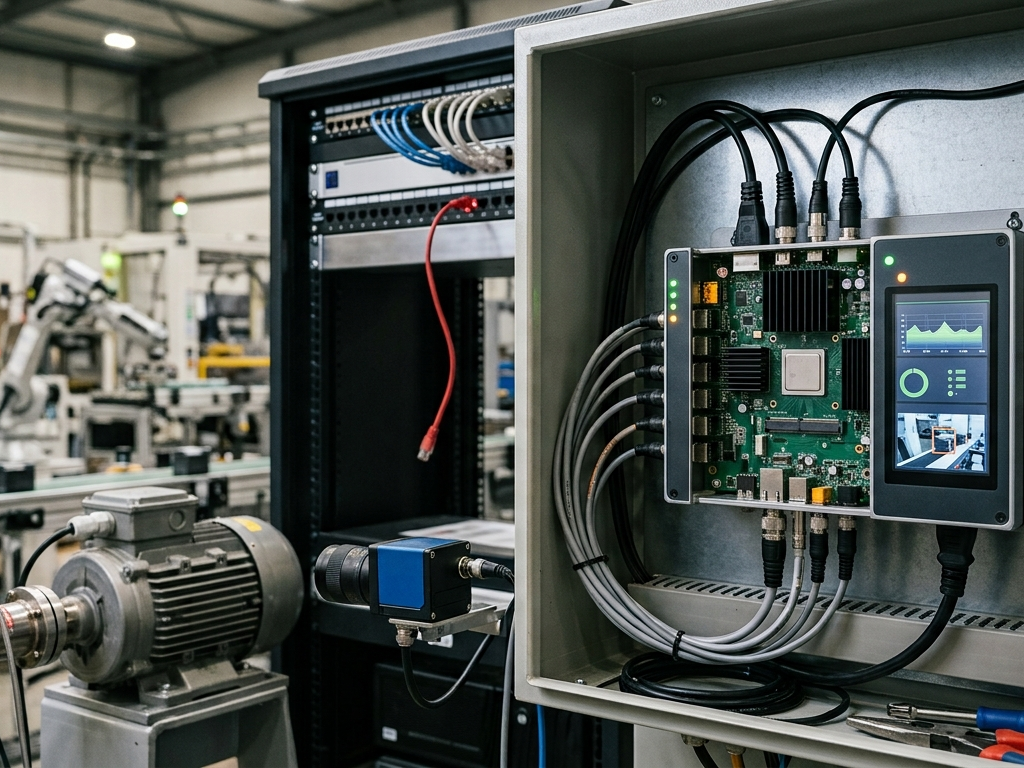
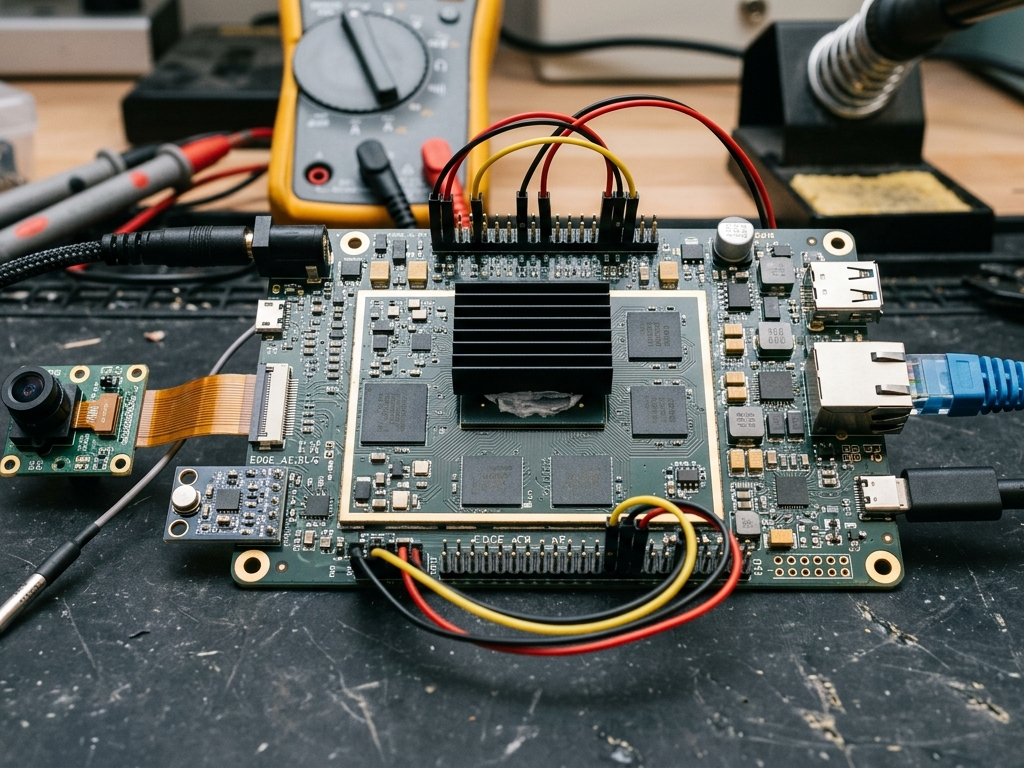
Edge AI depends on hardware that can run AI models directly where data is generated. Unlike large cloud data centers, edge devices usually have tighter limits on power, memory, size, and processing capacity Modern chips therefore combine generalpurpose processors with specialized AI accelerators that can perform machine learning inference efficiently This allows devices such as cameras vehicles, robot smartphones, and industrial controllers to analyze data locally without sending every task to a remote server.
AI Accelerators and NPUs
Neural Processing Units and other AI accelerators are designed to execute common machine learning operations efficiently. They can handle workloads such as neuralnetwork inference while using less power than running the same workload entirely on a general-purpose processor GPU and specialized accelerators can also be used at the edge when an application needs more computational performance. The right hardware depends on the AI model response time requirements power budget, and physical constraints of the device
Sensors and Embedded AI Hardware
Processing power alone is not enough. Edge AI systems also need hardware that can collect information from the physical environment. Cameras can provide visual data, microphones can capture sound, and motion temperature, pressure, and other sensors can provide additional information. An embedded AI system can combine these input process them locally, and produce a decision or trigger an action This combination of embedded AI hardware, sensors, and optimized models is what allows intelligence to operate directly inside everyday devices and machines
What Are the Main Advantages of Edge AI?
Edge AI offers several practical advantages because it moves AI inference closer to where data is generated. Instead of relying on a constant connection to a remote server, a device can process important information locally and respond based on its own computing resources.
- Lower latency: Local processing can reduce the delay between receiving data and producing an AI result, which is valuable for robotics, industrial automation, and other real-time applications.
- Better data privacy: Sensitive information can remain on the device instead of being continuously transferred to a cloud server.
- Lower bandwidth use: Devices can analyze or filter data locally and send only important results to the cloud, reducing unnecessary data transfer.
- local operation: Some Edge AI applications can continue performing inference during temporary network interruptions.
- ️ Faster local decisions: Devices can respond directly to sensor information without waiting for a cloud round trip.
- Potentially lower data-transfer costs: Reducing the amount of information sent to centralized servers can help lower network and data transfer requirements at scale.
These advantages do not mean that every AI workload should move to the edge. Large model training, centralized analytics, long term storage, and computationally intensive task can still benefit from cloud infrastructure. In practice the strongest architectures often combine edge processing with cloud computing.
What Are Real-World Examples of Edge AI?
Edge AI is already being used in situations where devices need to interpret information locally and respond quickly Its applications range from consumer electronics to industrial systems, transportation healthcare and robotics The common factor is that AI inference happens close to the source of the data, allowing machines to make useful decisions without sending every sensor reading or image to a remote cloud service.
Smart Cameras and Security Systems
Smart cameras can use on device AI to identify objects, detect movement recognize specific events or distinguish between relevant and irrelevant activity. Instead of continuously uploading an entire video stream a camera can analyze footage locally and send an alert or selected information when something important happens This can reduce bandwidth requirements and may also help limit unnecessary transmission of sensitive video data.
Robotics and Industrial Automation
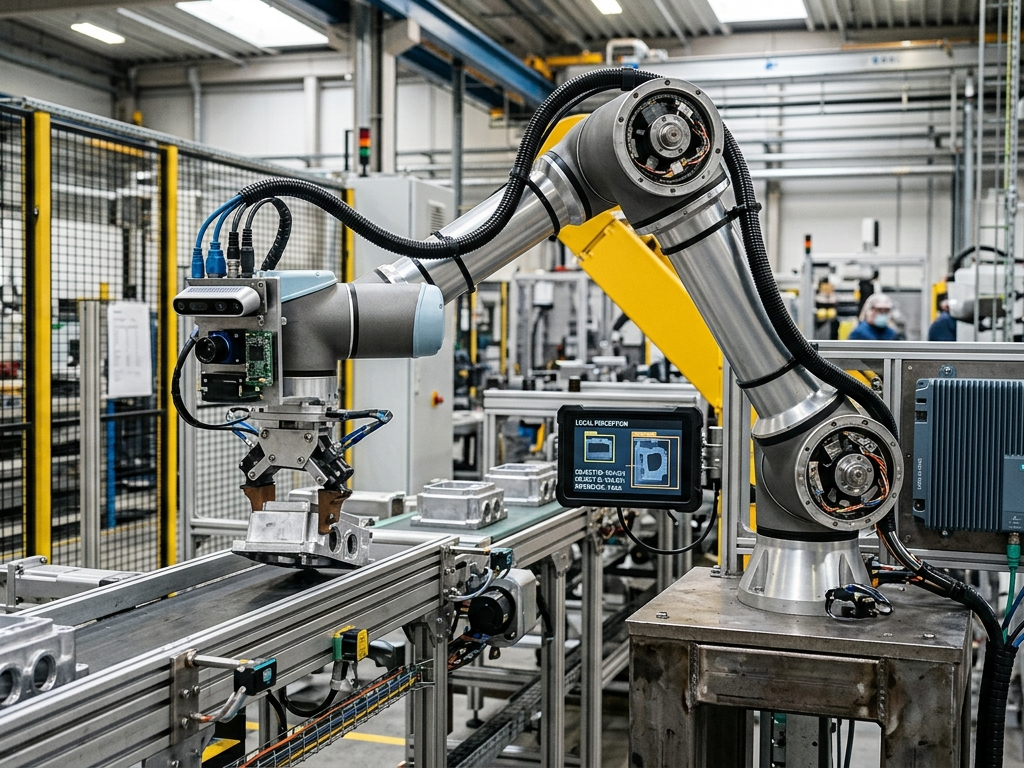
Robots rely heavily on fast perception and control, making Edge AI particularly useful for industrial automation. A robot can process camera feeds and sensor information locally to identify objects monitor equipment, navigate a workspace, or adjust its movements. Manufacturing systems can also use local AI to detect defects or unusual machine behavior without waiting for every measurement to reach a cloud server Local inference is especially valuable when a machine needs to react within a short and predictable timeframe.
Smartphones and Smart Devices
Many modern smartphones and smart devices include dedicated hardware for local AI tasks. On device processing can support features such as speech recognition, image enhancement, camera functions, biometric recognition, and personalized experiences. Running suitable models locally can reduce dependence on a network connection and keep some user data on the device More demanding tasks can still be sent to cloud services when greater computing resources are required.
Connected Vehicles and IoT
Vehicles and industrial IoT systems generate large volumes of sensor data that cannot always be sent to the cloud before every decision Edge AI can process information from cameras, radar, motion sensors, and other devices locally to support functions such as object detection equipment monitoring predictive maintenance and environmental awareness. The cloud can then be used for fleet management, long term analytics software updates and other centralized tasks
What Are the Limitations of Edge AI?
Edge AI provides faster local processing, but running AI directly on devices also introduces important limitations. Unlike cloud data center edge devices usually have restricted memory processing power, storage, and energy. Developers therefore have to balance model accuracy and complexity against the physical limits of the hardware. A model that works easily on a powerful server may need to be compressed or optimized before it can run efficiently on a small device.
Limited Computing Resources
Edge devices cannot always match the processing capacity available in large cloud data centers. This can limit the size and complexity of AI models that can run locally Techniques such as quantization model compression, pruning, and hardware-specific optimization can make models more efficient, but these approaches may involve trade-offs between performance, accuracy, memory usage, and power consumption.
Model Optimization
AI models designed for the edge often need to be carefully optimized for a specific processor or accelerator Developers may need to reduce model size, simplify operations, or use specialized inference formats. This additional engineering work can increase development time, particularly when the same application needs to support many different devices and hardware platforms.
Device Management and Security
Deploying AI across thousands or millions of distributed devices creates another challenge Each device may need software updates, model updates, security patches, monitoring and performance management. Physical access to edge hardware can also create security risks. Strong authentication, encryption secure boot processes, and regular updates are therefore important for protecting distributed Edge AI systems.
Does Edge AI Replace Cloud AI?
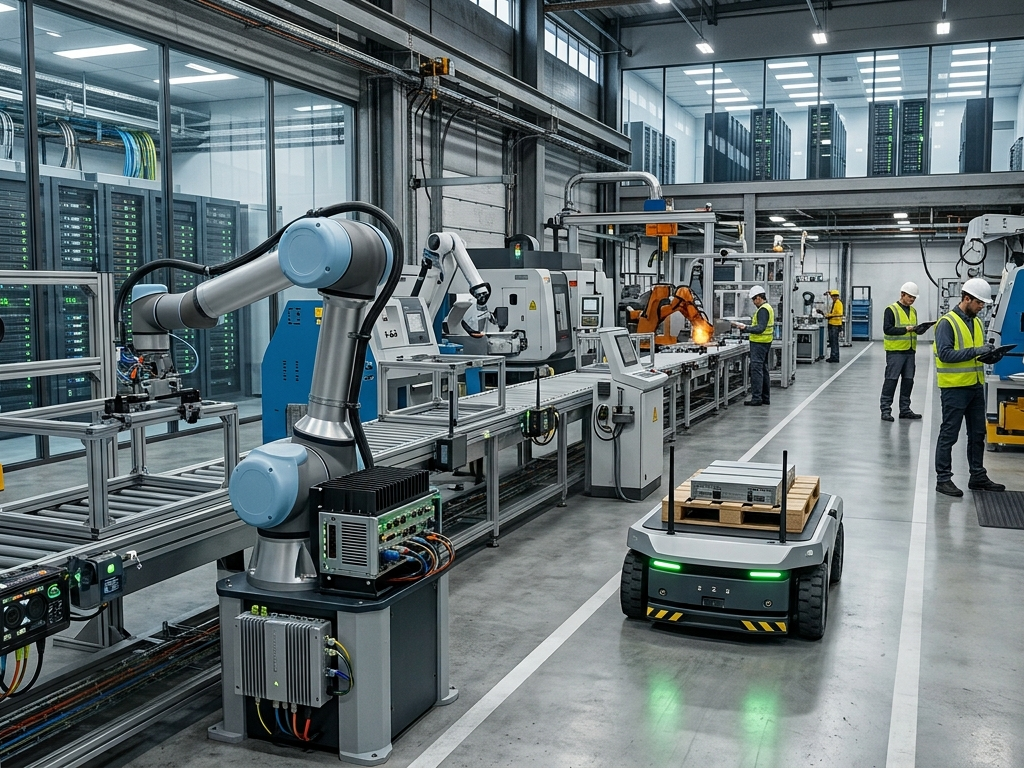
NoEdge AI does not replace cloud AI. Instead the two approaches can work together in a hybrid architecture. Edge devices are well suited to tasks that require fast local decisions, while cloud platforms provide the large scale computing, storage, model training and centralized management that many AI systems still need. The goal is not to move every AI workload away from the cloud, but to process each task in the location where it makes the most practical sense.
What the Edge Handles
Edge devices can handle real time AI inference, sensor processing, immediate alerts, computer vision, and other tasks where low latency or local operation is important. For example a factory camera could detect a manufacturing defect locally and immediately alert a machine controller, while a robot could process its sensors locally to adjust its movement.
What the Cloud Handles
Cloud infrastructure remains valuable for training large AI models, storing large datasets performing complex analytics managing fleets of connected devices, and distributing updated models A device can therefore perform fast inference locally while periodically communicating with the cloud for updates, reporting, or more computationally demanding workloads.
This hybrid cloud edge approach is likely to remain important as AI becomes more distributed. Instead of choosing between Cloud AI and Edge AI as competing technologies, organizations can combine them to balance latency privacy computing power connectivity and cost.
The Future of Edge AI
The future of Edge AI will be shaped by smaller and more efficient AI models, increasingly capable processor and devices that can make more decisions locally New generations of Neural Processing Units and specialized AI accelerators are making it practical to run machine learning workloads on smartphones cameras vehicles industrial controllers and other constrained devices At the same time techniques such as model compression and TinynML are helping bring AI capabilities to smaller, lower-power hardware.
Edge AI is also likely to become more closely connected with cloud platforms rather than replacing them. Future systems could use local AI for immediate decisions while sending selected information to the cloud for training, large scale analytics, coordination, and model updates This approach could make smart factories connected vehicles robotics healthcare devices, and IoT systems more responsive while reducing unnecessary data movement. As AI becomes increasingly distributed, the most important question may no longer be whether intelligence belongs in the cloud or on the device, but which parts of an AI workload should run in each location.
Frequently Asked Questions
What Is the Difference Between Cloud AI and Edge AI?
Cloud AI processes data on remote servers while Edge AI performs AI inference on or near the device generating the data. Cloud AI provides access to powerful centralized computing, while Edge AI can offer lower latency reduced data transfer and local operation Many modern systems combine both approaches rather than relying exclusively on one.
Why Is Intelligence Moving From the Cloud to Edge Devices?
AI is moving closer to devices because some applications need faster responses, lower network dependence better control over sensitive data, and reduced bandwidth usage. Robots smart cameras, vehicles, and industrial machines can benefit from processing information locally when decisions need to happen quickly or connectivity is unreliable.
What Are the Main Advantages of Edge AI?
The main advantages include lower latency local data processing, reduced bandwidth requirements potential privacy benefits, and the ability to perform some AI functions without a continuous internet connection Edge AI can also reduce the amount of raw sensor data that needs to be transferred to centralized cloud systems.
Does Edge AI Work Without Internet?
Yes some Edge AI systems can perform inference without an internet connection when the required AI model and processing hardware are available locally. However internet connectivity may still be needed for software updates, model updates cloud storage centralized monitoring, or tasks that require more computing power than the device can provide
What Are Real World Examples of Edge AI?
Real world examples include smart security cameras, smartphones, industrial robots, autonomous machines connected vehicles, smart sensors, and IoT devices. These systems can analyze information locally to detect objects monitor equipment recognize events or make decisions without sending every piece of raw data to the cloud.
Conclusion
Edge AI explained simply means bringing AI processing closer to where data is created Instead of sending every piece of information to a remote cloud server, devices can perform suitable AI tasks locally using embedded processors, other AI accelerators. This can reduce latency, limit unnecessary data transfer, support local operation, and improve responsiveness in applications such as robotics, smart cameras industrial automation smartphones and connected vehicles.
However, Edge AI is not replacing cloud computing. The strongest systems will often combine both approaches, using the edge for fast local inference and the cloud for large scale training storage analytics, and centralized management As AI models become smaller and edge hardware becomes more capable intelligence will likely become increasingly distributed across devices and cloud infrastructure The future of AI may therefore be less about cloud versus edge and more about putting the right intelligence in the right place